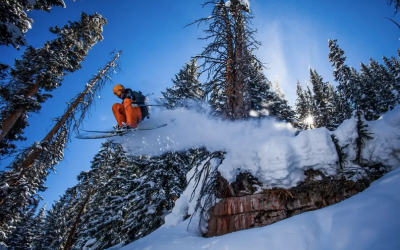
Backcountry Avalanche Training

by scott on February 16, 2013


Headed out to backcountry ski or snowboard this winter? Make sure you are properly educated about avalanches first – Avalanche Education is a crucial tool for anyone venturing out of bounds in the winter. Basic avalanche education includes:

  • Characteristics and types of avalanches
  • Movement of avalanches
  • Classifications by size and danger scale
  • Mountain snowpack: metamorphism and layering
  • Trip planning and preparation
  • Risk management and decision-making
  • Human influence in group dynamics, decision-making and accidents

Travelers in the backcountry should also be proficient at:

  • Beacon and probe use
  • Identifying and evaluating avalanche terrain
  • Route-finding and travel techniques
  • Snow pit and snow layer analysis and tests
  • Risk evaluation
  • Identifying “red flags”
  • Avalanche rescue and beacon search techniques

Further information about these topics can be found on the Forest Services National Avalanche Center website.  Information is a great start when coupled with formal training, like an AIARE Level 1 course. Apex’s AIARE courses offer the tools you need to increase awareness in the backcountry. Upcoming three day Level 1 courses take place beginning Feb. 22nd and March 8th. For more information and to register, view our Colorado AIARE Level 1 Avalanche Education courses on our website.

Additionally here is a interesting video about avalanches from National Geographic

{ 0 comments }

Backcountry Skiing Colorado’s 10th Mountain Division Huts


The 10th Mountain Division Hut

In the mid 20th century, Fritz Benedict dreamed of creating a Colorado hut system modeled after the European Alps’ Haute route.  The WWII 10thMountain Division soldier teamed up with an Aspen architect, and created what is today considered one of the premier backcountry hut systems in the world.  The 14 huts are linked to 300-plus miles of skiable routes, and are connected to 17 other huts in the area between Vail, Leadville and Aspen.

Ready for turns in pristine powder

Skiing or snowshoeing Colorado’s backcountry hut system is ranked as one of National Geographic’s top 100 adventures, and is an idyllic winter playground for the backcountry enthusiast.  The 10thMountain division hut system is the most extensive in North America.  The term “hut” is misleading, as the polished log cabins are furnished with wood stoves, private bedrooms, group bunks and propane cooking stoves, which makes for a comfortable stay in Colorado’s rugged backcountry.  A few of the huts even boast saunas.

Beginner, intermediate and advanced skiers alike can enjoy the hut system, as the spectrum of accessibility for most huts ranges between 2 and 11 miles, or more with hut link-ups.  Vance’s Cabin is a short distance from the trailhead and can be accessed easily, which makes it the perfect destination for those seeking an easygoing outing into the backcountry . The Eisman hut, located 7 miles north of Vail in Colorado’s Gore range, is most popular among backcountry skiers seeking adventure in pristine powder.  The area bordering the cabin offers a wide variety of treed lines and open bowls.  The 10thMountain Division hut is located near Leadville, and access trails are linked to the Colorado and Continental Divide Trails.  Skiers and snowboarders can make fresh turns in the open bowls surrounding the cabin, while Homestake Peak (13,209 ft) beckons ski mountaineers.   Sweeping views of the Continental Divide can also be enjoyed from the wraparound window bench adjacent to the hut’s wood stove.

Window bench by the wood stove. Just add hot cocoa!

Colorado’s hut system is truly a state treasure, and is a once in a lifetime experienced that should not be missed.  Apex Mountain School offers professionally guided trips to a variety of huts, and can tailor a trip to your goals and experience level.  Everyone can enjoy the peace and grandeur of the Colorado Rockies, whether you’re 7 or 75!  For more information on Apex hut trips, visit  http://apexmountainschool.com/backcountry-skiing-colorado/trips/backcountry-hut-trip-2


{ 0 comments }

Best Climbing Spots in Thailand

by scott on June 20, 2012

Thailand’s international tourism industry is booming. In the past couple of years Thailand has seen a sharp increase in American tourists and welcomes all who visit. To add to the appeal, the beautiful islands of Koh Phi Phi, Railay, and Koh Yao Noi are home to some excellent rock climbing in a beautiful tropical setting. The best part is, these local crags aren’t very far from your hotel and offer some of the best climbing in Thailand.

Grateful Wall (Mang Sau) –Koh Yao Noi

The Grateful Wall is a private ocean side climbing area offering single pitch sport routes up to 130 feet long. The reason this area is so private is because it’s only accessible by boat. You can charter one for the day for a minimal fee and enjoy these 5.10-5.12 routes. If they tire you out you can check out some great snorkeling at the nearby beach.

Tonsai Tower – Koh Phi Phi

This massive tower is full of 5.8 moderates to more difficult 5.11 routes. They range from 40 feet for shorter climbs and up to 450 feet for routes to the summit. This tower has seen a lot of re-bolting and now sports mostly titanium and stainless steel glue in bolts, all have been placed after the year 2000. This wall is also popular with climbing schools. Guides are always friendly and cooperative if you want to climb something they are using, just ask!

Drinking Wall – Koh Phi Ph

This neat wall is accessible via a trail just 15-20 min. from Tonsai Tower. The routes are shorter, but more challenging then Tonsai Tower. Expect the lowest rated routes to be 5.10+ and the harder routes to be 5.12. The drinking wall is less featured then most of the other walls in Koh Phi Phi and provides hard routes with challenging and fun crux sections.

Thaiwand Wall – Railay Beach

Some of the locals consider the Thaiwand Wall one of the best crags in South East Asia. This massive formation of limestone offers long, challenging multi-pitch routes with a reward of fantastic views at the top. The area is full of overhangs so plan your descent carefully and try to get off by sunset because navigating the jungle in the dark is very difficult with no trail. It’s also unique because the formation is hollow. Non-climbers can scale their way to the top via ladders and fixed lines from inside the rock formation.

Thailand is home to countless opportunities for world class climbing in an exotic location and is sure to offer an experience you’ll never forget. If you don’t want to deal with the hassle of route finding, transporting gear, and want to maximize your climbing in Thailand make sure to contact us and let Apex Mountain School take you on the climbing adventure of a lifetime.

{ 1 comment }

Climbing Etiquette

by scott on May 30, 2012

Some days you just want to climb at a local crag that’s close and convenient. While this is usually the easiest and most accessible option, these spots can become overcrowded and tense. With long lines for moderate routes and confusion over who’s climbing where, a good day can quickly turn unpleasant. To ease the tension you can follow these few simple rules and help turn a crowded, noisy climbing spot into a harmonious and friendly environment.

Leave Spot at Home

Dog’s are great companions for many outdoor activities. They love hikes, bike rides, backpacking and swimming. When it comes to climbing, dogs may hinder the experience for the owner and others. At a crowded climbing area multiple dogs can get in the way of ropes, bark and distract others, and further crowd the area. So try to find a sitter for spot, or if you must take him/her, use a leash and be respectful.

One Rope, One Climb

Nothing is more frustrating than finally getting a chance to get out and climb a favorite or long-awaited route and finding a rope dangling on it with no one in sight. Setting up a rope to claim a route for later use is inconsiderate and disrespectful to those who are ready to climb it. If you and your friends are using the rope, no problem, take the time you need. Just be sure to clean the route and pull the rope when it’s not being used.

Miscellaneous Noises

Let’s face it, everyone climbs for different reasons. Some climb for the social connection, some for personal achievement, and some for relaxation. Small grunting noises through a crux are understandable, everyone does it. Screaming and cursing your way up a pitch is excessive and distracting, and changes the experience for other climbers. If you like listening to music while you climb, keep the volume down; loud music can disrupt climber and belayer communication. Remember, not everyone shares your tastes, and many others enjoy the solitude offered in wilderness climbing environments.

Be Friendly

It all boils down to a simple philosophy that rings true not only in climbing but in many other environments: be courteous and respectful to those around you and your day of climbing will probably be a great one. The climbing community invites many courteous and kind personalities but prepare yourself for those who may not be courteous and kind by setting a good example. Whether or not they follow suit is not up to you, but you can choose to move to a different spot and have a great time climbing. Have fun out there!

{ 0 comments }

The ice is in!

by scott on December 21, 2011

As the Vail Valley ski areas await more snow, ice climbers are enjoying unseasonably thick ice falls right here in East Vail!

Ice climbing is a great way to get out and enjoy the spectacular mountains of Colorado on ice formations ranging from low angle beginner to steeper advanced routes.

If it’s mixed climbing that you are looking for, you’ll find that here too – this exciting sport is a great way to test your skills on rock and ice.

Check out this exhilarating and fun experience today. For more information or to register today, visit our Vail Ice Climbing page, register here, or call us at (888) 686-7685.

{ 0 comments }

Apex is having a sticker contest!

by scott on November 7, 2011

That’s right…Apex is ready for a new sticker, and we want your input!

Rules? None! Any shape or size is welcome. You can use our logo or not…just ask and we’ll send you a high resolution graphic by email – send a quick request through our contact us page. The deadline to submit a design is Thursday November 17, 2012. Please submit a high resolution graphic in Adobe Photoshop or Illustrator format.

A winner will be selected and announced on Monday November 21, 2012.

{ 0 comments }

Wilderness First Responder Colorado

by scott on May 16, 2011

You and your climbing partner “Randy” are having an excellent day of climbing near Moab Utah. After five hours of climbing Randy is preparing to lead his first 5.11 crack climb. Confident after climbing so well earlier in the day, Randy chooses not to place gear for the first relatively easy 25 feet. While placing his first piece, Randy’s grip loosens and he slips, falling 25 feet to the ground. He lands feet first and tumbles backwards, hitting his head with a loud “crack”. You rush towards Randy and quickly notice blood on the back of his head and his helmet split open. He has an obvious gash in the back of his head and his left leg is disfigured between his knee and ankle. He is sitting upright with his shoulders hunched forward, and he is not moving. As you approach closer, he says, “don’t move me, I don’t want to move”. What is your assessment of the patient? What is your first action? Do you have a treatment plan? Is this a life-threatening emergency?  Should you call for help or stay with your friend and try to address his injuries? Do you have the knowledge to properly stabilize Randy without causing further injury?

Backcountry enthusiasts, guides and travelers – Spending time in the backcountry gives you and the others in your group exposure to risks unlike any other environment. Miles away from professional medical treatment is a risk all its own. You may only have a small window of time to think and act before the patient’s vital signs drop significantly. Your wilderness medicine training may dictate the patient’s chance of survival.

Increase your knowledge and skills for response to medical and rescue scenarios in the backcountry by obtaining a Wilderness First Responder certification (“WFR”).  This certification is great for skiers, climbers, hikers, mountain bikers, whitewater enthusiasts, snowmobilers, and many others!

Wilderness First Responder courses are offered throughout the year by Apex, as well as the periodic WFR recertification (or WFR recert), required every three years to stay current. For more information on Apex’s wilderness medicine courses, visit our wilderness medicine page, call (970) 949-9111 or contact us by email.

{ 1 comment }

Replacing Cam Slings

by scott on January 28, 2011

Climbing gear holds the most important thing in the world, your life!

With so much riding on the protection of your gear, it’s essential to know the weak links in your system and to reduce the possibility of a failure.

Climbing gear that is made of cloth-like material such as ropes and slings are much more susceptible to the elements in comparison to metal gear such as carabineers and belay devices.  Materials such as webbing and slings are weakened by falls, UV radiation, dirt grinding on and possibly in the sling, and undesirable friction generated by bad orientation – basically, just good old wear and tear.

Gear that has both metal and cloth properties is not without exception to this wear and tear, and is sometimes neglected in being considered for replacement.  According to Black Diamond, cam slings should be replaced every 2-5 years with frequent use and 5-8 years with occasional use.

With any climbing gear, it is the responsibility of the climber to inspect and know the quality and condition of their gear.  If your brand new cam takes a whipper with the sling resting over a granite edge and the integrity of the sling is compromised, do not wait to replace it!  Common sense tells us the sling has been tested, and should be replaced.

It’s important to contact the manufacturer about re-slinging especially if it is being done through a company that is not the original manufacturer.  If the cam is not re-slung correctly and does not match the original design, the strength of the device may be compromised.  This is true for the new Black Diamond camalots and c3s.  The thumb loop of the cam has the capability to cut a single layer of webbing around 10kn (2,250lbs).  By clipping straight into the thumb loop the strength of the unit is also reduced by around 2kn (450lbs).

The bottom line is this: Don’t skimp – live to climb for many many years! Know your gear and its history, and replace it when it gets damaged or has just had enough aging and/or abuse.

Of course, this information is for entertainment purposes only. Climb and pursue mountaineering activities at your own risk. It is 100% your responsibility to verify the accuracy of this information, as well as to develop the ability to inspect and upgrade/replace your equipment accordingly.

{ 0 comments }

Winter 2011 Courses

by scott on January 28, 2011

Colorado is having a record year for snowfall – Vail’s snowpack is 137% above the yearly average. With plenty of snow to feed the icefalls, the ice is in equally impressive condition. In such a banner year we hope you join us to hit the Colorado backcountry slopes on skis, snowboard and snowshoes, or to get out for some awesome ice climbing!

As well, as outdoor enthusiasts you should take caution in preparing for your own back country and side country travel. Courses in avalanche education, winter survival and mountaineering skills, and wilderness medicine help prepare you if something doesn’t go as planned when you’re in the backcountry.

Our 2011 winter season is well under way and many of our Vail, Colorado –based season outings still have space available. You can find more info on these trips and courses in our new events list and events calendar. Take your pick of ice climbing, backcountry skiing and hut trips, mountaineering, avalanche education, wilderness medicine and survival skills.

As always, all of our trips are also offered privately on a daily basis.

Avalanche Education courses:

Colorado’s snowpack is full of variability and thus, inherently unstable. As more and more people venture deeper into the backcountry to find new powder runs, they must go with a heightened awareness or face potentially higher consequences. Avalanche courses combined with the proper safety equipment are an excellent way to manage that risk.

Apex is offering a 3 day hut trip on 2/25/11 (7am) – 2/27/11(5pm). The trip includes AAA (American Avalanche Association) compliant avalanche fundamentals curriculum with 24 hours of instruction, 16 of those will be field hours. Check out our Backcountry Hut Trip page for more information.

There is still space in the AIARE level 1 avalanche course on 2/11/11 (8am) – 2/13/11 (5pm). All Apex’s AIARE courses are full besides this one so check our AIARE level 1 page for more information.

Avalanche courses are available on a private daily basis also.

Vail, Colorado’s Beaver Creek Ski Patrol is offering their last free 2 hour introduction to avalanche safety class on February 3rd at the Edwards Ambulance District from 7-9 pm. Apex will be present at this event and we encourage all who are interested in increasing their risk management in the backcountry to attend this free class. Space is limited contact the Beaver Creek Ski Patrol for more information: 970-754-6610

Ice Climbing trips and courses:

Colorado’s ice has been growing at a record rate with warm days and cool nights. Our beginner ice climbing courses are scheduled for 1/31, 2/14, and 2/28. Our intermediate ice climbing courses are scheduled for 2/8, 2/22, 3/8, and 3/22. We can also arrange a private course at your convenience.

We also offer the following ice climbing courses and trips daily: group ice climbing, Vail Valley ice climbing, Breckenridge ice climbing, rappelling, leading ice 101, anchor building and gear placement for ice.

Indoor climbing at a simulated indoor rock facility is offered daily also.

Backcountry Skiing trips and courses:

With lots of fresh snow in the Colorado backcountry we hope you’ll come polish your turns in the backcountry with us. Our beginner backcountry skiing courses are scheduled for 2/2, 2/16, and 3/2. We can also arrange a private course at your convenience.

We also offer the following backcountry skiing courses and trips daily: intermediate backcountry skiing, Vail Valley backcountry skiing, ski mountaineering, and backcountry hut trips.

Mountaineering trips and courses:

Develop travel techniques to climb in your local backcountry or train for a trip to summit the world. Our mountaineering 101 courses are scheduled for 2/7, 2/21, 3/14, and 3/28. We can also arrange a private course at your convenience.

Wilderness Medicine courses:

Do you know what to do if something goes wrong? Does your partner or buddy know? Don’t wait to find out – wilderness medicine courses offer skills training in preparation for responding to an accident, stabilizing a patient in the backcountry, and evacuating to proper care.

Colorado Wilderness First Responder courses are scheduled for 4/10-17 and 5/22-29. If you have a certification and are looking to update, WFR recertification courses will take place on 4/9-10 and 5/21-22. Private courses are available for larger groups at your request.

{ 0 comments }

Avalanche Course Update

by scott on January 14, 2011

AIARE: Level 1 Avalanche Course

As you know from our last blog, Apex Mountain School will be offering AIARE level 1 Avalanche Education Courses in Colorado’s Vail Valley. Apex has teamed up with AIARE (the American Institute for Avalanche Research and Education) to provide two, three day, level 1 avalanche education courses in the 2011 winter season. The course consists of one classroom day and two field days. Field days involve backcountry travel via ski touring, splitboarding, or snowshoeing.

Our curriculum is AIARE standard and adheres to the AAA (American Avalanche Association) suggested requirements for avalanche courses, and all instructors are AIARE-certified. The 3 day course offers an introduction to avalanche hazard management.

Course topics include:

  • Planning and preparation for traveling into the backcountry: learn how to plan your route, backup plans, escape plans, and how to use the weather and avalanche forecast. What equipment and items to bring into the backcountry.
  • Decision making and risk management in in avalanche terrain.
  • Introduction to the snow science in avalanche prediction.
  • Assessing terrain.
  • Evaluating the snowpack: snow pits, snowpack tests, and quick tests to do while in motion.
  • How to understand weather and its effect on the snow stability.
  • The human factor: how to reduce associated subjective hazards.
  • Observation techniques, including: field recordings, observation checklist, and red flags.
  • Route finding: establishing pathways through the mountains.
  • Companion rescue: effectively using your beacon, shovel and probe in the field.

This course has no prerequisites, and is highly recommended for outdoor professionals and recreationalists that travel in avalanche terrain.

Dates for the Vail, Colorado AIARE level 1 courses are January 28th-30th, and February 11th-13th, 2011.  Visit our website’s AIARE level 1 page, call (888) 686-7685, or contact us to register today. For those interested or who have already signed up visit AIARE’s “preparing for an avalanche course” to gain more insight on how to get ready for the course.

{ 0 comments }